

15-5PH
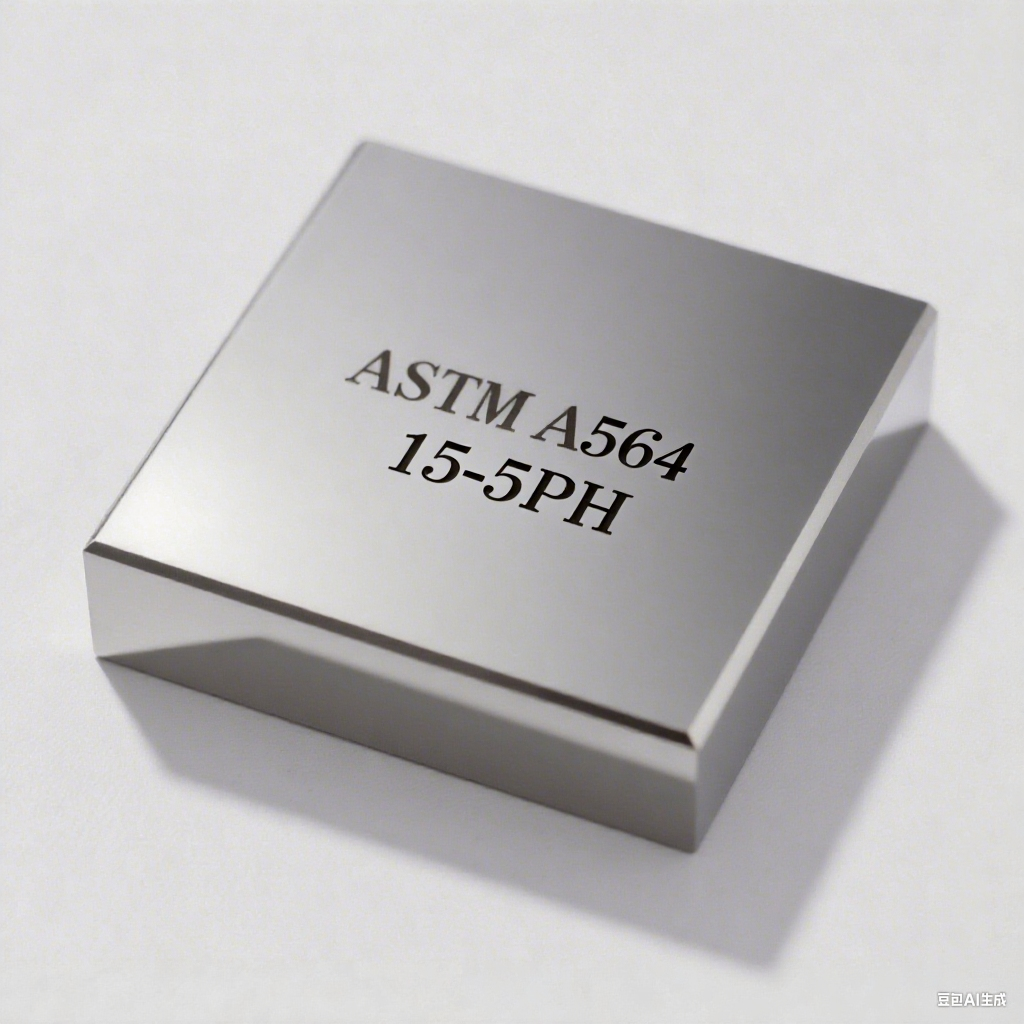
15-5PH is martensitic precipitation hardening stainless steel, and the balance of high strength, high toughness and corrosion resistance is achieved by precipitation strengthening of copper (Cu) and grain refinement of niobium (Nb). The following is systematically analyzed from six dimensions:
I. Standard System and Code
1. Core implementation standards
- Industrial General: ASTM A564 (specifies bars, forgings, plates, grade XM-12);
- Aerospace: AMS 5659 (bars/forgings), AMS 5862 (plates) (meeting military-grade purity requirements);
- International Compatibility:
- American UNS: UNS S15500;
- German DIN: 1.4545;
- Chinese National Standard: New grade 05Cr15Ni5Cu4Nb, former name 15-5PH (commonly used name in engineering).
2. Name resolution
- “15-5ph”: “15” stands for chromium (Cr≈15%), “5” stands for nickel (Ni≈5%), and the PH is the abbreviation of Precipitation Hardening, emphasizing the precipitation of ε-Cu nano-phase through aging.
II. Chemical composition (mass fraction%, ASTM standard)
15-5PH adopts the design of “Cr-Ni-Cu-Nb Quaternary Synergy”, with precise elements:
| Element | Content Range | Core Function |
|---|---|---|
| C | ≤0.07 | Strictly control carbides, optimize weldability and corrosion resistance |
| Cr | 14.0 – 15.5 | Form a Cr₂O₃ passivation film, resist uniform corrosion |
| Ni | 3.5 – 5.5 | Stabilize martensitic structure, improve toughness and corrosion resistance |
| Cu | 2.5 – 4.5 | Precipitate ε-Cu nanophases (5 – 10 nm) during aging, significantly increase strength (verified by electron microscopy at University of Science and Technology Beijing) |
| Nb | 0.15 – 0.45 | Refine grains, inhibit intergranular corrosion, precipitate NbC to assist in strengthening |
| Mn/Si | ≤1.00/≤1.00 | Improve toughness and workability |
| P/S | ≤0.040/≤0.030 | Strictly control impurities, reduce the risk of embrittlement/heat cracking |
III. Mechanical properties (heat treatment state)
The strength (core advantage) of 15-5PH can be flexibly controlled by aging temperature, and its typical properties are as follows (compared with 17-4PH, the toughness of 15-5PH is better):
| Condition | Tensile Strength (MPa) | Yield Strength (MPa) | Elongation (%) | Hardness (HB) | Core Characteristics |
|---|---|---|---|---|---|
| Solution Annealed | ≥620 | ≥310 | ≥20 | ≤363 | Easy to process (machining, welding) |
| Aged at 480℃ | ≥1310 | ≥1180 | ≥10 | ≥363 (HRC≥40) | High strength (aircraft landing gear) |
| Aged at 550℃ | ≥1060 | ≥1000 | ≥12 | ≥331 (HRC≥35) | Balance of strength and toughness (valves, shafts, etc.) |
| Aged at 620℃ | ≥930 | ≥865 | ≥16 | ≥277 (HRC≥28) | Best plasticity (precision components) |
- Physical properties: the density is 7.75 g/cm³, and it is nonmagnetic (martensite matrix remains nonmagnetic, which is different from traditional martensite steel).
IV. Heat Treatment Requirements (Two Steps of Solution and Aging)
- Solution Treatment (Basic Preparation):
- Temperature: 1020 – 1060°C (hold for 1 – 2 hours);
- Cooling: Rapid water cooling (to obtain low – carbon martensitic structure, laying a structural foundation for age strengthening);
- Function: Dissolve carbides, homogenize composition, and restore plasticity and workability.
- Aging Treatment (Strength Regulation):
After solution treatment, strengthening phases are precipitated through air – cooling aging, and temperature determines the performance tendency:
| Aging Process | Temperature Range | Microscopic Changes | Application Scenarios |
|---|---|---|---|
| Aging at 480°C | 470 – 490°C | A large amount of ε – Cu precipitates, maximizing strength | High – stress components in aviation |
| Aging at 550°C | 540 – 560°C | Synergistic strengthening of ε – Cu + NbC | Industrial valves, shafts |
| Aging at 620°C | 610 – 630°C | Precipitates coarsen, plasticity improves | Precision parts for food and medical industries |
V. Main application fields (high toughness+high strength scenes)
15-5PH monopolizes the following fields by virtue of “toughness is better than 17-4PH+strength covers 620~1310 MPa”:
- Aerospace:
- Aircraft structural components (landing gears, wing joints), turbine blades (aged at 480°C, impact – resistant + temperature – resistant up to 300°C);
- Aerospace fasteners (aged at 550°C, balanced strength and toughness, cost – effective alternative to titanium alloys).
- Energy and Chemical Industry:
- High – pressure valve cores, reactor stirring shafts (aged at 550°C, corrosion – resistant + wear – resistant);
- Nuclear waste storage tanks (aged at 620°C, radiation – resistant + excellent plasticity, easy to process).
- Marine Engineering:
- Seawater pump shafts, propellers (aged at 550°C, seawater corrosion – resistant + anti – fatigue fracture);
- Offshore platform mooring systems (aged at 480°C, high – strength against wind and wave impact).
- High – end Manufacturing:
- Food and medical equipment (pickling tanks, sterile pipelines, aged at 620°C, organic acid – resistant + hygienic compliance);
- Precision instrument components (such as optical equipment supports, aged at 620°C, excellent plasticity + dimensional stability).
Key Summary
- Core Advantages:
- Toughness is better than 17 – 4PH (transverse performance increased by 15 – 20%), suitable for complex stress scenarios;
- Corrosion resistance is close to 304 stainless steel (in atmospheric and dilute acid environments), with excellent hot and cold workability.
- Limitations:
- Long – term service temperature ≤ 300°C (ε – Cu coarsens at high temperatures, resulting in strength reduction);
- Nickel – based alloys (such as Hastelloy) need to be used instead in concentrated hydrochloric acid/hydrofluoric acid environments.
15 – 5PH is a “benchmark for high – toughness precipitation – hardening steel”. Through refined alloy design, it breaks through the toughness bottleneck of 17 – 4PH and becomes a core material in high – end fields such as aviation, nuclear power, and marine, especially suitable for “high – strength + high – toughness” dual – demand scenarios.