
F317
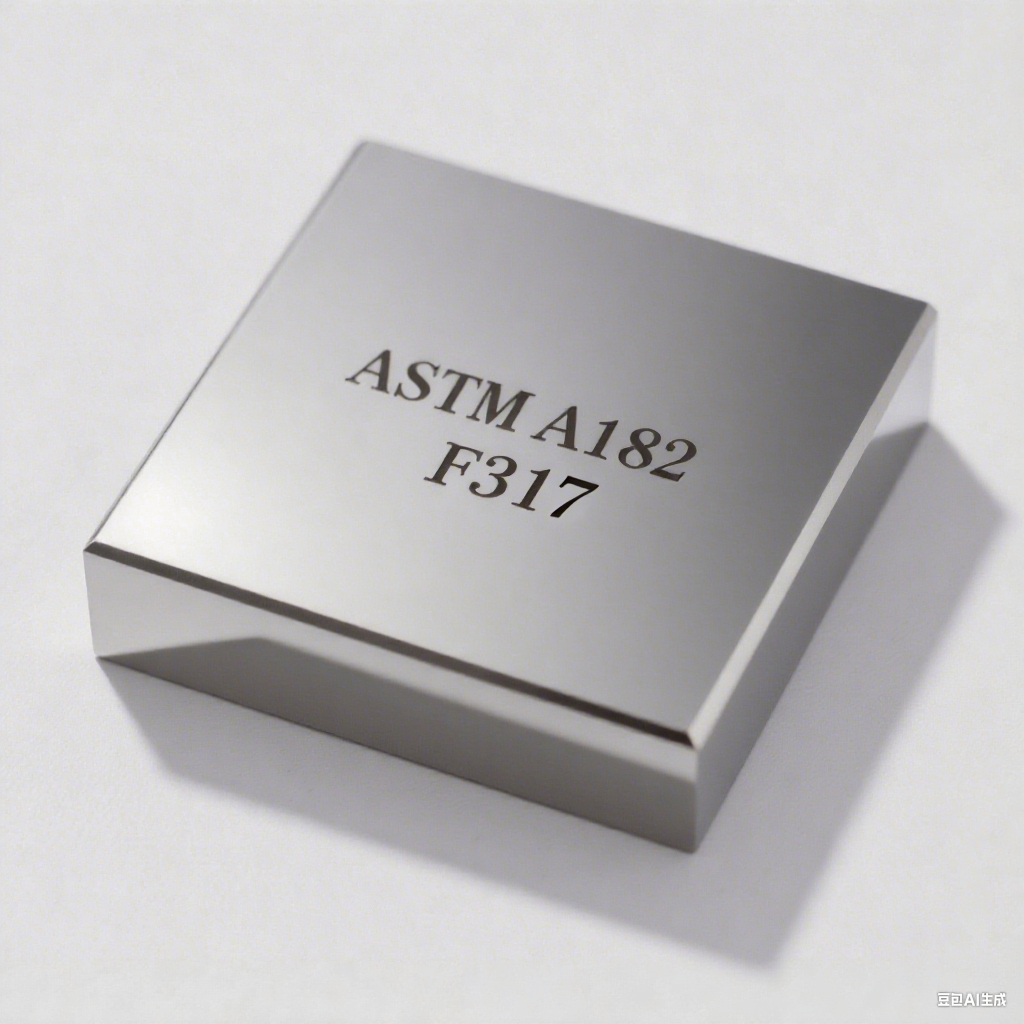
F317 is a kind of high molybdenum austenitic stainless steel, and its pitting/crevice corrosion resistance is enhanced by increasing molybdenum content. The following analysis is made from the aspects of standard, code, composition, performance, heat treatment and application system:
I. Standards and brand system
1. Core Standards
F317 mainly follows ASTM standards:
- ASTM A182: Regulates forged/rolled stainless steel flanges, pipe fittings, and valve components for high temperatures (corresponding to the “F317” grade).
- ASTM A240: Standard for stainless steel plates/strips (covering F317 plates).
- ASTM A312: Standard for seamless/welded stainless steel tubes (guiding the production of F317 tubes).
Standards of other countries/regions (such as JIS G4303, EN 10088, GB/T 20878) all have corresponding grade specifications.
2. International Grade Correspondence
| System/Region | Grade | Description |
|---|---|---|
| US UNS | UNS S31700 | Basic type F317 |
| European EN | EN 1.4449 | Equivalent to F317 |
| Japanese JIS | SUS317 | General – purpose grade |
| China (Old) | 0Cr19Ni13Mo3 | Has been updated to the new national standard |
| China (New) | 06Cr19Ni13Mo3 | Conventional type (C ≤ 0.08%) |
| Low – carbon variant | F317L (UNS S31703) | C ≤ 0.03%, better resistance to sensitization |
II. Chemical composition (ASTM standard, mass fraction%)
The “high molybdenum design” of F317 (Mo content 3.0 – 4.0%, higher than 2.0 – 3.0% of 316) is its core feature, significantly enhancing resistance to chloride ion corrosion:
| Element | Content Range | Function Analysis |
|---|---|---|
| C | ≤0.08 (F317L≤0.03) | Controls carbide precipitation and reduces the risk of intergranular corrosion |
| Si | ≤1.00 | Assists in deoxidation and improves oxidation resistance |
| Mn | ≤2.00 | Stabilizes austenite and improves workability |
| P | ≤0.045 | Impurity element that needs strict control |
| S | ≤0.030 | Impurity element; low sulfur ensures corrosion resistance |
| Cr | 18.0 – 20.0 | Forms a passivation film and resists uniform corrosion |
| Ni | 11.0 – 15.0 | Stabilizes austenite and enhances toughness/corrosion resistance |
| Mo | 3.0 – 4.0 | Inhibits pitting/crevice corrosion caused by chloride ions (core advantage) |
III. Mechanical properties (room temperature after solution treatment)
F317 has both high strength and high plasticity, suitable for cold working and welding:
| Performance Indicator | Typical Value (ASTM Requirement) | Remarks |
|---|---|---|
| Tensile Strength | ≥515 MPa | Can reach 550 – 650 MPa in actual production |
| Yield Strength (σ₀.₂) | ≥205 MPa | Austenitic stainless steel has low yield strength and can be strengthened by cold working |
| Elongation (δ₅) | ≥35% | Gauge length 50mm, excellent plasticity, convenient for forming |
| Hardness | ≤223 HB (or ≤95 HRB) | Non – aged state, hardness increases after cold working |
Physical Properties
- Density: 7.98 g/cm³ (slightly higher than 7.95 g/cm³ of 316 because molybdenum atoms are heavier).
- Thermal conductivity: 14.9 W/(m·K) (20°C), lower than 16.3 W/(m·K) of 316; molybdenum reduces heat transfer.
- Thermal expansion coefficient: 16.5 μm/m·°C (20 – 100°C), close to that of 316, suitable for dissimilar metal connection.
IV. Heat Treatment Requirements
The heat treatment of F317 centers on “solution annealing”, whose purpose is to dissolve carbides and restore corrosion resistance:
- Solution Treatment:
- Temperature: 1010 – 1150°C (adjusted according to product form, for example, 1050 – 1100°C is commonly used for tubes).
- Cooling: Rapid water cooling (quenching) to prevent carbide precipitation and ensure a single austenitic structure.
- Application: Must be done for all F317 products before leaving the factory; re – solution treatment is required after welding (especially for thick – walled parts) to avoid the 450 – 850°C sensitization range (carbides precipitate along grain boundaries, greatly reducing corrosion resistance).
- Special Treatment:
- No stabilization treatment is needed (the presence of molybdenum has significantly reduced the risk of sensitization, which is different from Ti/Nb – containing 321/347 stainless steels).
V. Main application fields (relying on the corrosion resistance advantage of high molybdenum)
F317, due to its “pitting resistance being 30 – 50% higher than that of 316”, focuses on strong corrosion and high – chlorine environments:
- Chemical Industry:
- Equipment for high – concentration sulfuric acid (above 85%), phosphoric acid, and organic acids (reaction kettles, pipelines, pump valves), with better corrosion resistance than 316.
- Desulfurization systems (flue gas desulfurization towers, slurry pipelines), resisting chloride ion and sulfide corrosion.
- Marine Engineering:
- Seawater desalination membrane modules, seawater cooling system pipelines, resisting seawater pitting and crevice corrosion.
- Offshore platform structural parts, ship exhaust pipes, resisting salt spray and wave erosion.
- Pharmaceutical and Food:
- Aseptic pharmaceutical equipment (fermenters, filters), resisting disinfectants (such as sodium hypochlorite).
- High – end food processing equipment (acidic food production lines), meeting hygiene standards.
- Energy and Environmental Protection:
- Nuclear power condensation systems (pipes, heat exchangers), resisting high – temperature water and radiation environments.
- Flue gas treatment equipment in waste – to – energy plants, resisting hydrogen chloride and dust corrosion.
- Special Fields:
- Corrosion – resistant vessels in chemical laboratories, high – end instrument components (low magnetic permeability, austenite is non – magnetic).
- Downhole oil and gas extraction equipment (downhole pipes), resisting formation water and hydrogen sulfide corrosion.
VI. Key Contrast and Precautions
- vs 316 Stainless Steel:
- Advantages: F317 has a 1% higher molybdenum content, and its pitting resistance equivalent number (PREN = Cr + 3.3Mo + 16N) reaches 28 – 32 (316 is 24 – 28), with chloride ion corrosion resistance increased by 30 – 50%.
- Disadvantages: The cost is 20 – 30% higher, and it is not necessary to use in ordinary environments (such as atmosphere, weak corrosion).
- Corrosion Limitations:
- It still corrodes in concentrated hydrochloric acid and hydrofluoric acid, so nickel – based alloys (such as Hastelloy) need to be replaced.
- Avoid staying at 450 – 850°C for a long time (to prevent sensitization, especially in the welding heat – affected zone).
- Processing Tips:
- Cold working can strengthen it (for example, cold – rolled plates have higher strength), and it has good weldability.
- Solution treatment is required after welding thick plates. ER317L welding wire is recommended (low carbon, reducing sensitization in the heat – affected zone).
In summary, F317 is an “austenitic stainless steel upgrade solution for extreme corrosion environments”. It breaks through the corrosion bottleneck of 316 through high molybdenum design and becomes a core material in fields such as chemical industry, marine, and nuclear power. Its low – carbon variant F317L is more suitable for structures that cannot undergo heat treatment after welding, further expanding application scenarios.