
Incoloy 926
Complete analysis of Incoloy 926 alloy (UNS N08926)
I. Implementation standards (classified by product form)
The technical specifications of Incoloy 926 cover ASTM (American standards) and many international field standards, targeting different product forms:
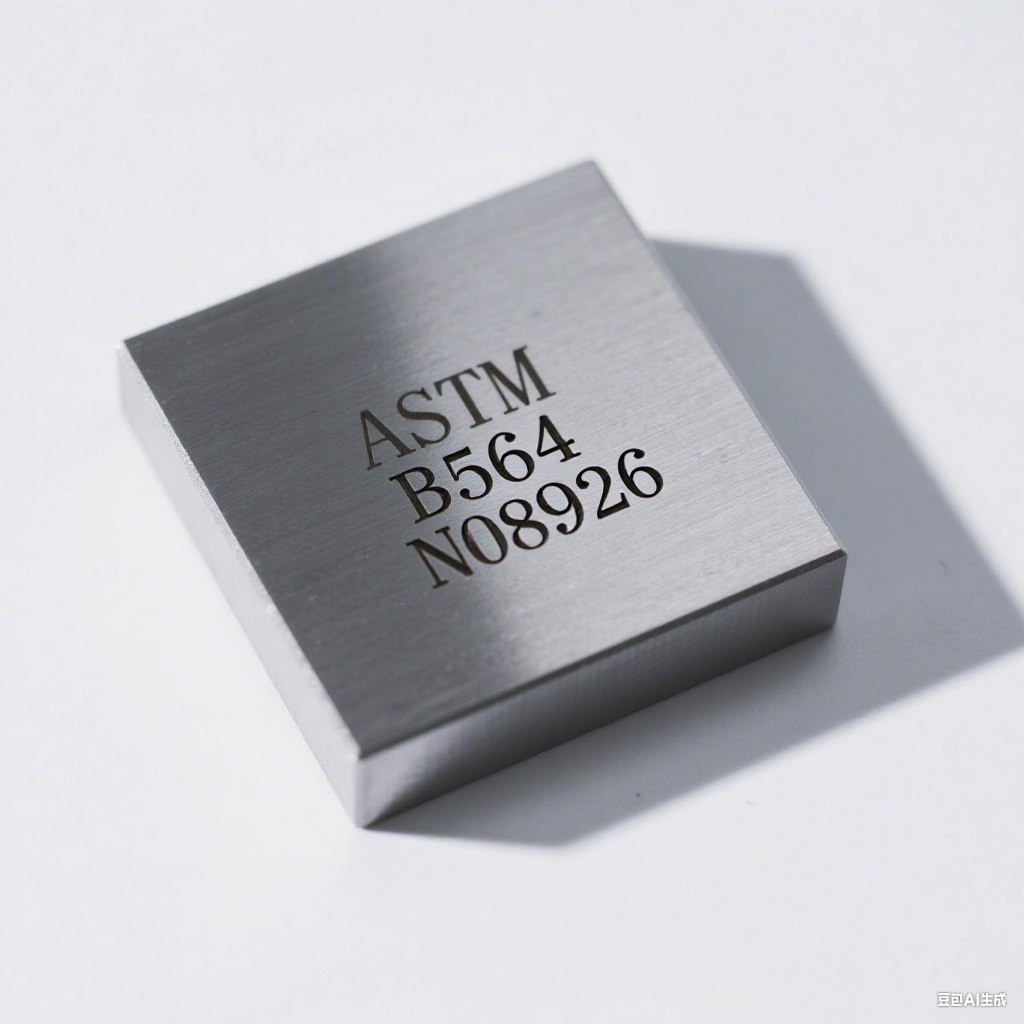
- Forgings: ASTM B564 (general forgings), ASTM B625 (special forgings);
- Plates/strips: ASTM B168 (hot – rolled/cold – rolled plates), ASTM A240 (pressure vessel plates);
- Seamless pipes: ASTM B167 (seamless pipes), ASTM B751 (high – temperature seamless pipes);
- Welded pipes: ASTM B366 (welded pipes), ASTM B829 (corrosion – resistant welded pipes);
- Bars/wires: ASTM B649 (bars/wires), ASTM B677 (silver – plated wires).
II. Name and Code
- General name: Incoloy 926;
- Authoritative identification:
- American standard: UNS N08926 (core number, unique general identifier);
- European standard: W.Nr. 1.4529 (Germany), 2.4857 (old version, the current mainstream is 1.4529);
- National standard: S38926 (corresponding grade 015Ni25Cr20Mo6CuN, super austenitic stainless steel).
III. Chemical composition (mass fraction,%, typical range of ASTM standard)
Incoloy 926 is a 6% Mo – type super austenitic alloy, which strengthens resistance to chloride corrosion through the synergy of “high Mo + N”. Its composition is as follows:
| Element | Content Range | Core Function |
|---|---|---|
| Nickel (Ni) | ≥24.0 | Stabilizes the austenitic matrix and resists stress corrosion |
| Chromium (Cr) | 19.0 – 21.0 | Resists oxidation, pitting corrosion and crevice corrosion |
| Molybdenum (Mo) | 6.0 – 7.0 | Resists reducing media (sulfuric acid, hydrochloric acid) |
| Iron (Fe) | Balance (≈22 – 26) | Reduces cost and assists in strengthening |
| Nitrogen (N) | 0.15 – 0.25 | Improves pitting corrosion resistance and strengthens the matrix |
| Copper (Cu) | ≤1.5 | Resists sulfuric acid and organic acid corrosion |
| Titanium (Ti) | ≤0.65 | Stabilizes carbon (TiC) and inhibits intergranular corrosion |
| Carbon (C) | ≤0.02 | Avoids carbide precipitation and embrittlement |
| Manganese (Mn) | ≤2.0 | Improves hot working fluidity |
| Silicon (Si) | ≤0.5 | Optimizes casting/forging structure |
| Sulfur (S) | ≤0.01 | Inhibits hot working hot cracking tendency |
IV. Mechanical properties (solid solution treatment state, typical value at room temperature)
After solution treatment (water quenching/air cooling at 1050 – 1150°C), Incoloy 926 combines medium – high strength and high plasticity in the -196 – 400°C range:
| Performance Indicator | Typical Value (Solution State) | Remarks |
|---|---|---|
| Tensile Strength | ≥650 MPa | Can be further improved by cold working (e.g., reaches 750 MPa + after cold rolling) |
| Yield Strength (0.2%) | ≥295 MPa | Some standards require ≥490 MPa (need to be combined with specific specifications) |
| Elongation (%) | ≥35 | Excellent formability, supporting processing such as rolling and welding |
| Hardness (HB) | ~190 – 220 | No age hardening (the austenitic matrix is stable, and aging does not significantly strengthen) |
V. Heat Treatment Requirements
- Core Process: Solution Treatment
- Temperature: 1050 – 1150°C (1100°C is commonly used, hold for 1 – 2 hours);
- Cooling: Water quenching or rapid air cooling (to ensure uniform solid solution of N and Mo and maximize corrosion resistance).
- Processing Auxiliary Points:
- Hot working temperature: 1000 – 1150°C (avoid lower than 900°C to prevent hot brittleness);
- Cold working: Easy to form in the solution state, no additional aging is required (there is no precipitation strengthening phase in the matrix, and aging has limited improvement on performance).
VI. Main application fields
Incoloy 926, due to its “resistance to chlorides + resistance to strong corrosion + wide – temperature stability”, focuses on extreme corrosion scenarios:
- Desulfurization and Denitrification (FGD System):
- Limestone slurry pipelines, absorber linings, spray heads (resistant to Cl⁻ concentration of 10⁴ – 7×10⁴ppm, resistant to pitting/crevice corrosion, tests show no corrosion for 1 – 2 years).
- Chemical Industry:
- Sulfuric acid/phosphoric acid production: Evaporators, heat exchangers (resistant to corrosion by ≤60% sulfuric acid at <80°C);
- Chloride medium systems: (brine, seawater desalination, pulp bleaching equipment, resistant to Cl⁻ stress corrosion cracking).
- Marine Engineering:
- Seawater cooling pipelines, offshore platform fasteners (resistant to seawater/salt spray corrosion, replacing 904L in high – corrosion scenarios).
- Energy Field:
- Nuclear spent fuel pools: (resistant to high radiation + corrosion), acid gas field pipelines: (resistant to H₂S/CO₂/Cl⁻ synergistic corrosion).
- Special Scenarios:
- Pharmaceutical/food industry: (resistant to chemical cleaning agents and high – temperature sterilization), corrosive chemical transport tanks.
Supplementary Characteristics
- Corrosion resistance advantage: Compared with 904L, due to higher Mo + N, the resistance to chloride pitting/crevice corrosion is improved by 3 – 5 times;
- Weldability: ERNiCrMo – 10 welding wire (such as AWS A5.14 standard) is recommended, and heat input should be controlled (≤1.0kJ/mm) to avoid hot cracking;
- Limitation: Not resistant to strong oxidizing acids (concentrated nitric acid) and fluoride media, and such environments should generally be avoided.
Incoloy 926 is a “benchmark for super austenitic stainless steel”, and its core competitiveness lies in the synergy of high Mo + N to strengthen resistance to chloride corrosion. When selecting materials, it is necessary to match standards and processing states based on medium (Cl⁻ concentration, acid type), temperature, and stress level.