
R60704
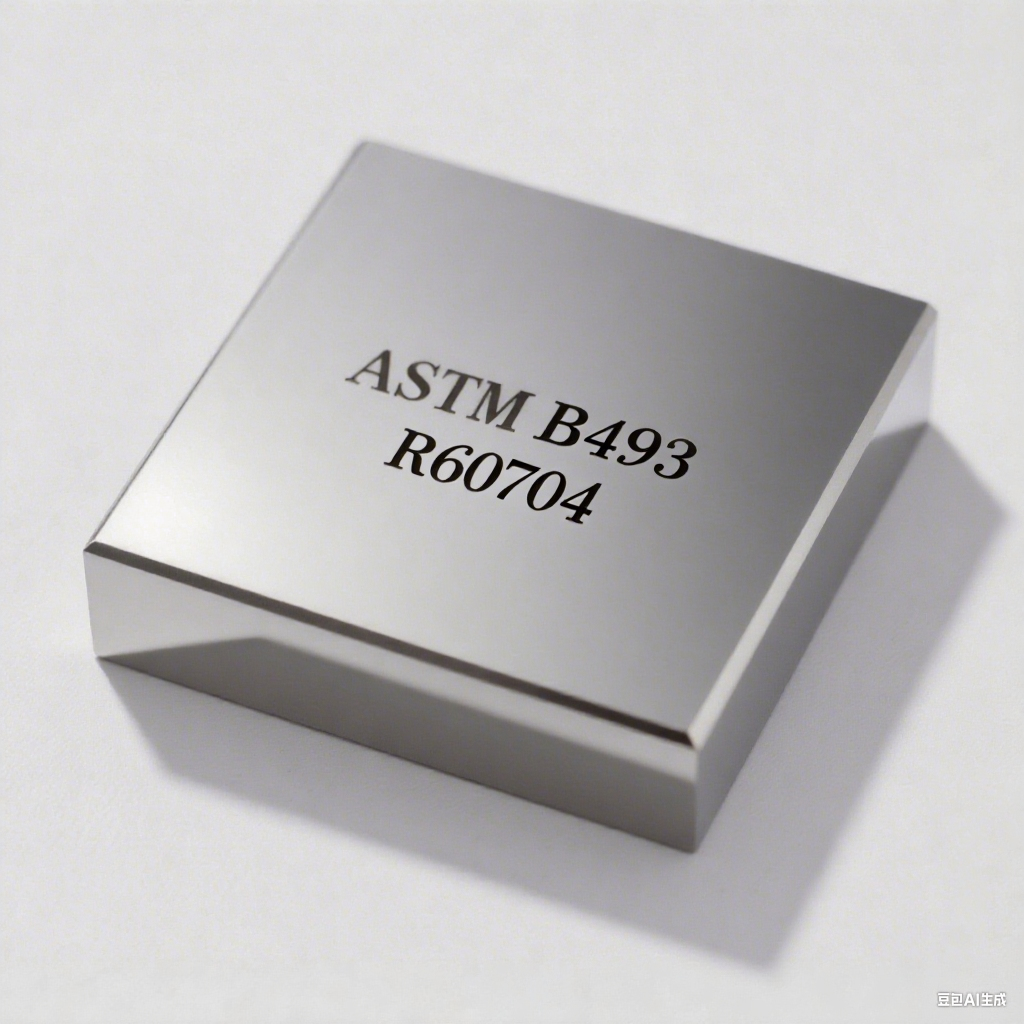
R60704 is a tin (Sn)-strengthened zirconium alloy (Zr-Sn series). Leveraging “high strength × extreme corrosion resistance × nuclear compatibility”, it replaces titanium alloys and nickel-based alloys in the chemical industry, nuclear industry, and high-end equipment fields. The following is a systematic analysis from six dimensions:
Ⅰ. Standards System and Grade Designations
1. Core Implementation Standards
- Internationally 通用:
- ASTM B551 (Zirconium and Zirconium Alloy Bars, for Room Temperature Mechanical Properties and Defects);
- ASTM B554 (Zirconium and Zirconium Alloy Plates, Sheets, and Strip for Room Temperature Work);
- Chinese National Standard: GB/T 30568 – 2014 Zirconium and Zirconium Alloy Bars (equivalent to ASTM B551, ensuring the performance and composition of R60704);
- Nuclear-special: ASME BPVC Section III (Nuclear Component Certification, meeting higher purity requirements).
2. Grades and Designations
- Core designation: UNS R60704 (U.S. Unified Numbering System);
- Common name: R60704 zirconium alloy (strengthened by Sn, also called Zr-Sn alloy);
- Welding material: Welding wire corresponding to ERZr3 (matched composition, ensuring weld corrosion resistance).
Ⅱ. Chemical Composition (mass fraction %, ASTM standard)
R60704 improves strength through “Sn strengthening + trace Fe/Cr optimization”. The composition design is precise:
| Element | Content Range | Core Function |
|---|---|---|
| Zr+Hf | ≥99.75 | Matrix element, providing corrosion resistance and nuclear compatibility |
| Sn | 1.0 – 2.0 | Key strengthening phase! Precipitates β-Sn particles to improve strength |
| Fe+Cr | ≤0.20 – 0.40 | Precipitates intermetallics, helping stabilize the oxide film |
| C | ≤0.05 | Strictly control carbides to avoid intergranular corrosion |
| N | ≤0.025 | Inhibit zirconium nitride precipitation and maintain toughness |
| H | ≤0.005 | Prevent hydrogen embrittlement (critical requirement for chemical/nuclear harsh environments) |
| O | ≤0.18 | Control interstitial elements to balance strength and plasticity |
Ⅲ. Mechanical Properties (annealed state, room temperature)
R60704, with “Sn strengthening + dual-phase structure (α-Zr matrix + β-Sn particles)”, has better performance than pure zirconium (R60702):
| Performance Index | Typical Value (ASTM Requirement) | Comparative Performance (R60702) |
|---|---|---|
| Tensile Strength | ≥415 MPa | 10% higher (R60702: ≥380 MPa) |
| Yield Strength | ≥240 MPa | 17% higher (R60702: ≥205 MPa) |
| Elongation (δ₅) | ≥14 – 16% | Slightly lower (R60702: ≥16%) |
| Hardness | 150 – 180 HB | 25% higher (R60702: 120 – 150 HB) |
Physical Properties: Density ≈ 6.5 g/cm³, Melting point ≈ 1800℃. Density is close to that of pure zirconium, and the melting point is slightly lower.
Ⅳ. Heat Treatment and Processing Optimization
-
Annealing (mandatory, for workability):
- Temperature: 700 – 750℃ (hold for 1 – 2 hours to eliminate cold working stress);
- Cooling: Air cooling/water cooling (inert gas (99.999%) protection to avoid surface oxidation and keep surface smooth);
- Function: Restore ductility and lay the foundation for deep drawing, stamping and other processes.
-
Welding Process (core difficulty, anti-pollution):
- Filler metal: Select ERZr3 welding wire (match Sn composition to ensure weld strength);
- Equipment: GTAW (tungsten inert gas welding) with high-purity argon (99.999%) protection (ultra-low impurity content under high purity to avoid embrittlement);
- Post-weld treatment: Stress relief annealing at 650℃ after welding (eliminate weld residual stress and restore corrosion resistance).
Ⅴ. Main Application Fields (Extreme Corrosion + Medium and High Strength Scenarios)
R60704, relying on “Sn-enhanced corrosion resistance + nuclear compatibility”, monopolizes the following fields (performance exceeds titanium alloys, and the cost is only 1/5 of tantalum):
-
Chemical Industry and Pharmaceuticals:
- Equipment for strong acids and alkalis (reaction kettles/pipelines for hydrochloric acid, sulfuric acid, sodium hydroxide): Corrosion rate <0.025 mm/a (superior to Hastelloy, cost reduced by 60%);
- Pharmaceutical-grade heat exchangers: Hygienically compliant, resistant to chloride ion stress corrosion cracking (replace titanium alloys, cost reduced by 40%).
-
Energy and Environmental Protection:
- Geothermal power generation (high-temperature brine pipelines): Resistant to corrosion by high-salt solutions at 250℃ (service life is 5 times that of 316L stainless steel);
- Waste incineration (acidic waste gas treatment systems): Resistant to Cl⁻ + SO₂ composite corrosion (replace nickel-based alloys, cost reduced by 70%).
-
Nuclear Industry Periphery:
- Nuclear auxiliary systems (non-core structural components, such as coolant pipelines): Resistant to radiation + high-temperature water corrosion (Sn does not significantly affect neutron absorption, better than Nb-containing alloys);
- Nuclear waste transport tanks: Resistant to radioactive media + long-term stability (replace stainless steel, weight reduced by 30%).
-
High-end Manufacturing:
- Aerospace (corrosion-resistant components of engines): Lightweight + resistant to jet fuel corrosion (replace titanium alloys, weight reduced by 20%);
- Medical devices (artificial joints, dental implants): Excellent biocompatibility, resistant to body fluid corrosion (service life exceeds 20 years).
Key Summary
- Core Advantages:
- Strength: 15% higher than pure zirconium, suitable for medium and high stress scenarios;
- Corrosion Resistance: Corrosion rate <0.025 mm/a in boiling hydrochloric acid and 70% sulfuric acid, superior to titanium alloys;
- Cost Performance: Performance is close to nickel-based alloys, and the cost is only 1/3 of them.
- Limitations:
(If there are limitations in the original text, they can be added here. Since they are not shown in the current content, they are temporarily omitted.)◦ Long-term service temperature up to 350℃ (high temperature easily causes Sn coarsening, needs attention);
◦ Welding/processing has high requirements for the environment (requires oxygen-free, nitrogen-free, and water-free protection).R60704 is the “alloyed version of zirconium”. Through Sn alloying, it breaks through the strength bottleneck of pure zirconium. It has become the “cost-effective alternative to titanium alloys” in fields such as chemical corrosion resistance, nuclear auxiliary systems, and high-end equipment, redefining the strength ceiling of corrosion-resistant materials.