

F321
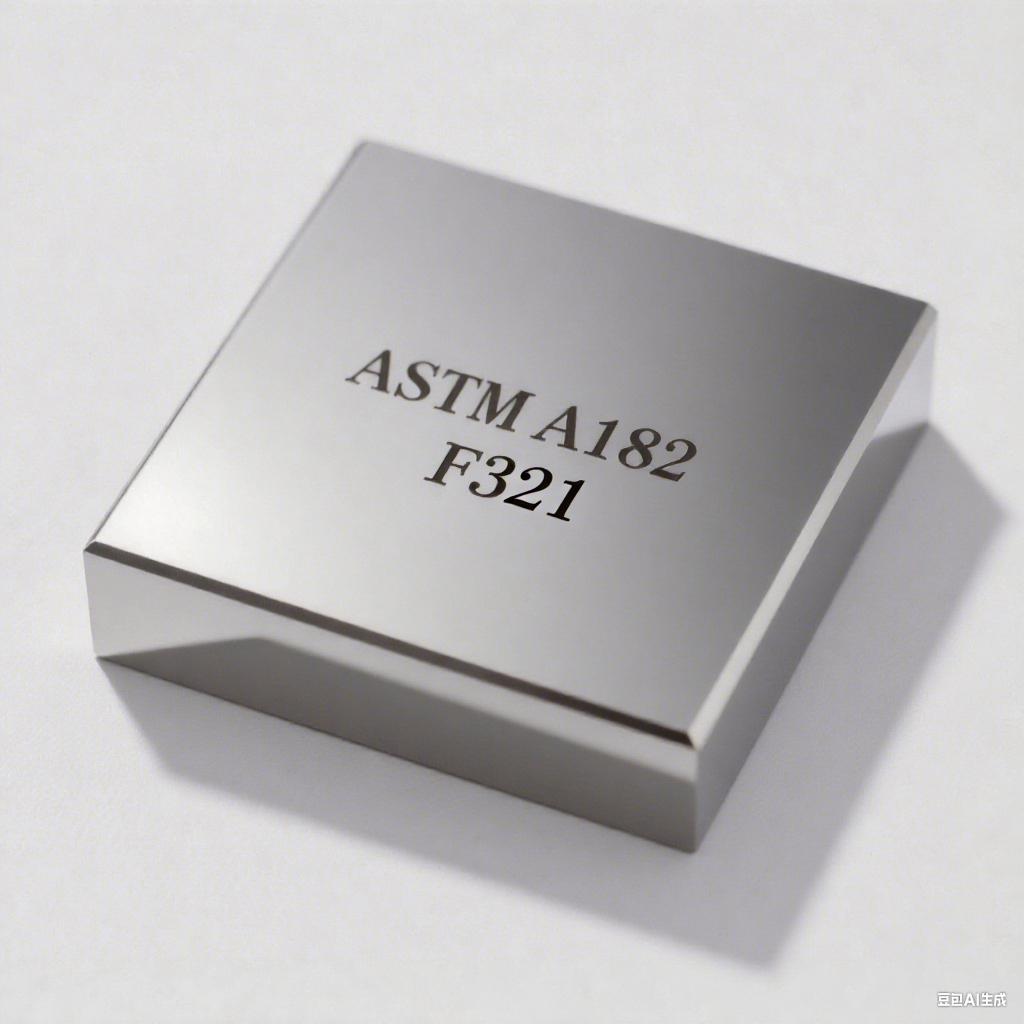
F321 is a titanium-containing stabilized austenitic stainless steel. Its core advantage is its strong intergranular corrosion resistance after welding and excellent high-temperature performance. The following is an analysis from the aspects of standard, code, composition, performance, heat treatment and application system:
I. Standards and brand system
1. Core Standards
F321 mainly follows ASTM standards and covers forms such as forgings, plates, and tubes:
- ASTM A182: Regulates forged/rolled stainless steel flanges, pipe fittings, and valve components for high temperatures (defines the “F321” forging grade).
- ASTM A240: Standard for stainless steel plates/strips (used for pressure vessels and linings of high – temperature equipment).
- ASTM A312: Standard for seamless/welded stainless steel tubes (guiding the production of high – temperature pipelines, such as boiler superheater tubes).
Other related standards:
- ASME SA – 182 (engineering application), JIS G4303 (Japan, grade SUS321), EN 10088 – 3 (Europe, grade 1.4541), GB/T 20878 (China, new national standard 06Cr18Ni11Ti, old grade 0Cr18Ni10Ti).
2. International Grade Correspondence
| System/Region | Grade | Description |
|---|---|---|
| US UNS | UNS S32100 | Basic type F321 |
| European EN | EN 1.4541 | Equivalent to F321 |
| Japanese JIS | SUS321 | General – purpose grade |
| China (New) | 06Cr18Ni11Ti | Low – carbon revision (C ≤ 0.08%) |
II. Chemical composition (ASTM standard, mass fraction%)
The core design of F321 is “titanium (Ti) stabilization”: Ti preferentially combines with carbon (C) and nitrogen (N) to form TiC/TiN, preventing chromium carbides (Cr₂₃C₆) from precipitating along grain boundaries, thereby avoiding intergranular corrosion (especially during welding or high – temperature service).
| Element | Content Range | Function Analysis |
|---|---|---|
| C | ≤0.08 | Control carbon content; Ti needs to be ≥5×(C + N) to fully combine with carbon |
| Si | ≤0.75 | Assist in deoxidation and improve oxidation resistance |
| Mn | ≤2.00 | Stabilize austenite and improve workability |
| P | ≤0.045 | Impurity element, strictly controlled |
| S | ≤0.030 | Impurity element, low sulfur ensures corrosion resistance |
| Cr | 17.0~19.0 | Form a passivation film and resist uniform corrosion |
| Ni | 9.0~12.0 | Stabilize austenite and improve toughness/corrosion resistance |
| Ti | 5×(C + N) ~ 0.70 | Combine with C/N to form TiC/TiN and inhibit Cr depletion (Core: Ensure sufficient Ti for stabilization) |
| N | ≤0.10 | Assist in stabilizing austenite; Ti needs to combine with N simultaneously |
III. Mechanical properties (room temperature after solution treatment)
F321 has both high strength and high plasticity, and excellent high – temperature creep performance (TiC hinders grain growth and improves deformation resistance):
| Performance Indicator | Typical Value (ASTM Requirement) | Remarks |
|---|---|---|
| Tensile Strength | ≥520 MPa | Still maintains ≥350 MPa at 600°C (high – temperature strength is better than 304, close to 347) |
| Yield Strength (σ₀.₂) | ≥205 MPa | Austenitic stainless steel has low yield strength and can be strengthened by cold working (e.g., the strength of cold – rolled plates increases by 30%) |
| Elongation (δ₅) | ≥40% | Gauge length 50mm, extremely good plasticity, convenient for forming such as pipe bending and stamping |
| Hardness | ≤217 HB (or ≤95 HRB) | Non – aged state, hardness increases significantly after cold working (e.g., cold – rolled plates can reach 300 HB) |
Highlights of High – Temperature Performance
- TiC exists stably at 400 – 800°C, enabling F321 to serve for a long time at 427 – 816°C (such as in aerospace engines and boiler pipelines), and its creep resistance is better than that of 304/316.
IV. Heat Treatment Requirements
The heat treatment of F321 centers on “solution annealing + titanium stabilization”:
- Solution Treatment:
- Temperature: 1010 – 1150°C (1050 – 1100°C is recommended to ensure sufficient dissolution of Ti and form a uniform austenitic structure).
- Cooling: Rapid water cooling (quenching) to distribute Ti uniformly. During cooling, TiC/TiN is preferentially formed to inhibit the precipitation of Cr carbides.
- Function: Restore a single austenitic structure and maximize resistance to intergranular corrosion and high – temperature performance.
- No Post – Welding Heat Treatment:
Because Ti has already combined with C/N in advance, even if the welding heat – affected zone undergoes the 450 – 850°C sensitization range, Cr₂₃C₆ (the root cause of intergranular corrosion) will not precipitate. Therefore, no additional heat treatment is required (suitable for complex welded structures, such as nuclear power pipeline systems).
V. Main application fields (relying on the characteristics of “anti-sensitization+high temperature stability”)
- High – temperature Service Scenarios:
- Nuclear power system: Steam generator pipelines, reactor coolant loops (resistant to high temperatures of 300 – 600°C, radiation + intergranular corrosion).
- Aerospace: Engine combustion chambers, outer rings of turbine blades (resistant to high – temperature corrosion of gas, creep).
- Boilers and pressure vessels: Superheater tubes, high – temperature reaction kettles (with many welding joints, corrosion – resistant without post – treatment).
- Strong Corrosion + Welding – Dense Environments:
- Chemical industry: Sulfuric acid/phosphoric acid equipment, desulfurization and denitrification pipelines (acid corrosion resistance + stable corrosion resistance after welding).
- Food and pharmaceutical: Aseptic filling lines, pharmaceutical reaction kettles (corrosion resistance at welding nodes, meeting hygiene standards).
- Coastal engineering: Curtain wall keels, seawater desalination equipment (salt spray corrosion resistance, maintenance – free after welding).
- Special Industries:
- Environmental protection equipment: Flue gas pipelines of waste incinerators (resistant to hydrogen chloride + high – temperature oxidation).
- Precision instruments: Components of semiconductor crystal growth furnaces (high – temperature resistance + low pollution, TiC prevents impurity precipitation).
VI. Key Contrast and Precautions
- vs 347 (containing Nb):
- Similarities: Both are stabilized austenitic stainless steels with strong resistance to intergranular corrosion.
- Differences: F321 contains Ti, while 347 contains Nb; NbC is more resistant to high temperatures than TiC (dissolution temperature of NbC ~1200°C, TiC ~1000°C). Therefore, 347 has better high – temperature strength (suitable for long – term service above 600°C), but F321 has a lower cost.
- vs 304/316:
- Advantages: The resistance to intergranular corrosion is increased by 3 – 5 times (especially in welding/high – temperature working conditions), and the high – temperature strength is higher.
- Disadvantages: The cost is 15 – 20% higher, and it is not necessary to use in ordinary environments (such as atmosphere, weak corrosion).
- Processing Tips:
- Can be strengthened by cold working (e.g., the strength of cold – rolled plates is increased by 30 – 50%), and the weldability is excellent (ER321 welding wire is recommended to match the Ti content).
- Avoid being in a state above 900°C for a long time (TiC will coarsen, reducing high – temperature strength, and the upper limit of service temperature needs to be controlled).
In summary, F321 is a “welding – friendly high – temperature austenitic stainless steel”. It breaks through the bottleneck that 304/316 is prone to sensitization after welding through Ti stabilization technology, and also has excellent high – temperature performance. It is widely used in nuclear power, aerospace, chemical industry and other fields. Compared with 347, F321 has a lower cost and is suitable for medium – to – high temperature (≤600°C) and welding – dense scenarios.