

F310
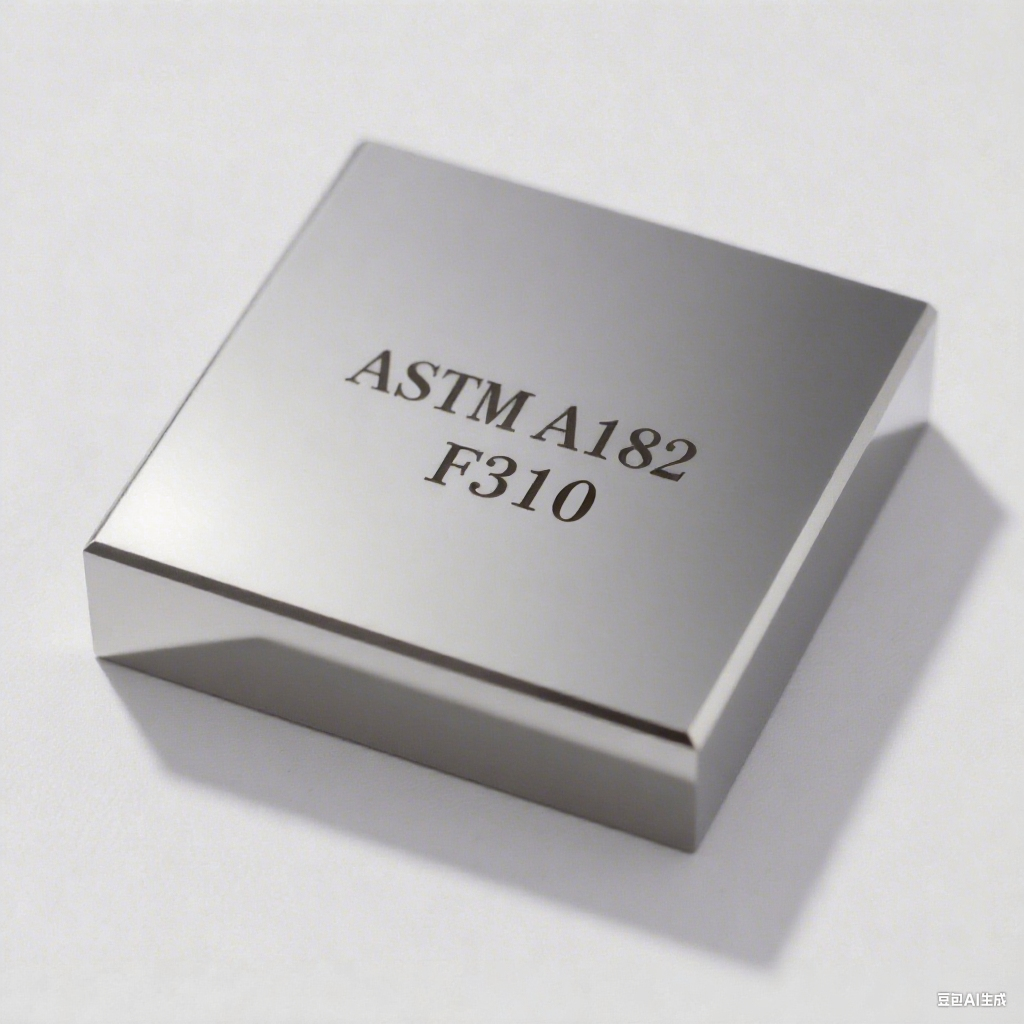
F310 is a high chromium-nickel austenitic heat-resistant stainless steel, and its core advantages are high temperature oxidation resistance (long-term stability at 1100℃) and high temperature strength. The following are analyzed from standards, codes, compositions, properties, heat treatment and application systems:
I. Standards and brand system
1. Core standards
F310 mainly follows ASTM standards and covers multi – form products:
- Forgings: ASTM A182 (defines “F310”, used for high – temperature flanges and pipes);
- Plates/strips: ASTM A240 (for pressure vessels, furnace linings, etc.);
- Tubes: ASTM A312 (for seamless/welded high – temperature pipelines);
It is also compatible with international standards such as ASME (e.g., SB446 tubes), ISO (e.g., 9723 bars), and EN 10095 (profiles).
2. International brand correspondence
| System/Region | Grade | Description |
|---|---|---|
| US UNS | UNS S31000 | Basic type F310 |
| European EN | 1.4821 | Equivalent to F310 |
| Japanese JIS | SUH310 | Heat – resistant optimized type (focus on high temperature) |
| Chinese GB | 20Cr25Ni20 | Old grade, austenitic heat – resistant steel |
II. Chemical composition (ASTM standard, mass fraction%)
F310 achieves high – temperature oxidation resistance through “high Cr – Ni synergy”:
| Element | Content Range | Function Analysis |
|---|---|---|
| C | ≤0.25 | A small amount of carbon increases high – temperature strength (needs to be controlled to prevent intergranular corrosion) |
| Si | ≤1.00 | Deoxidizes and assists in oxidation resistance |
| Mn | ≤2.00 | Stabilizes austenite and improves workability |
| P | ≤0.045 | Impurity, strictly controlled to reduce embrittlement risk |
| S | ≤0.030 | Impurity, low sulfur ensures corrosion resistance |
| Cr | 24.0 – 26.0 | Forms a dense Cr₂O₃ film, resisting oxidation at 1100°C (core!) |
| Ni | 19.0 – 22.0 | Stabilizes austenite and improves high – temperature toughness |
III. Mechanical properties (room temperature after solution treatment)
F310 has both high – temperature strength and room – temperature plasticity:
| Performance Indicator | Typical Value (ASTM Requirement) | Remarks |
|---|---|---|
| Tensile Strength | ≥515 MPa | Still ≥200 MPa at 800°C, excellent creep resistance |
| Yield Strength (σ₀.₂) | ≥205 MPa | Austenitic alloy has low yield strength and can be strengthened by cold working |
| Elongation (δ₅) | ≥30% | Gauge length 50mm, meets forming requirements (pipe bending, forging) |
| Hardness | ≤223 HB (or ≤95 HRB) | Hardness increases significantly after cold working (e.g., cold – rolled plate can reach 250 HB) |
IV. Heat Treatment Requirements
The core is “solution annealing” to dissolve carbides and restore performance:
- Solution Treatment:
- Temperature: 1030 – 1180°C (1050 – 1150°C is recommended to ensure complete dissolution of carbides);
- Cooling: Rapid water cooling (quenching) to obtain a single austenitic structure;
- Application: Mandatory before delivery; re – solution treatment is required after welding (to prevent sensitization of thick – walled parts).
V. Main application fields (high temperature oxidation scene)
Relying on the core advantage of “long – term oxidation resistance at 1100°C”, it focuses on:
- High – temperature Industrial Furnaces:
- Furnace bottom plates, furnace rolls, radiant tubes (resistant to oxidation in furnaces at 1000 – 1100°C, such as heat treatment furnaces and roasting furnaces).
- Energy and Environmental Protection:
- Heat – affected surfaces of waste incinerators (resistant to HCl, dust + high – temperature corrosion);
- Boiler superheater tubes (resistant to high – temperature steam oxidation, replacing some nickel – based alloys).
- Chemical Industry and Metallurgy:
- High – temperature reaction kettles (such as parts of 磷酸铁锂 roasting furnaces, resistant to high temperatures above 800°C);
- Metallurgical continuous casting rolls (resistant to molten steel splashing + high – temperature wear).
- Special Fields:
- Glass melting furnace parts (resistant to glass liquid erosion + high – temperature oxidation);
- Aviation engine test pieces (to verify high – temperature performance).
VI. Key Contrast and Precautions
- vs 310S (UNS S31008, low – carbon version):
- F310 (C ≤ 0.25%) has slightly higher high – temperature strength, while 310S (C ≤ 0.08%) has better resistance to intergranular corrosion (suitable for welding scenarios).
- Corrosion limitations:
- Prone to pitting in wet environments containing chloride ions (replace with 316L/duplex steel);
- Avoid the 450 – 850°C sensitization range (carbide precipitation reduces corrosion resistance).
- Processing tips:
- Can be strengthened by cold working, but softens easily at high temperatures;
- Use ER310 welding wire for welding, and solution treatment is recommended after welding thick plates.
F310 is a “benchmark austenitic steel for high – temperature oxidation resistance”. It breaks through the temperature upper limit of conventional stainless steel through high Cr – Ni and is irreplaceable in high – temperature fields such as industrial furnaces and energy. The division of labor with 310S is clear: F310 focuses on high – temperature strength, while 310S focuses on corrosion resistance, and selection should be made as needed.